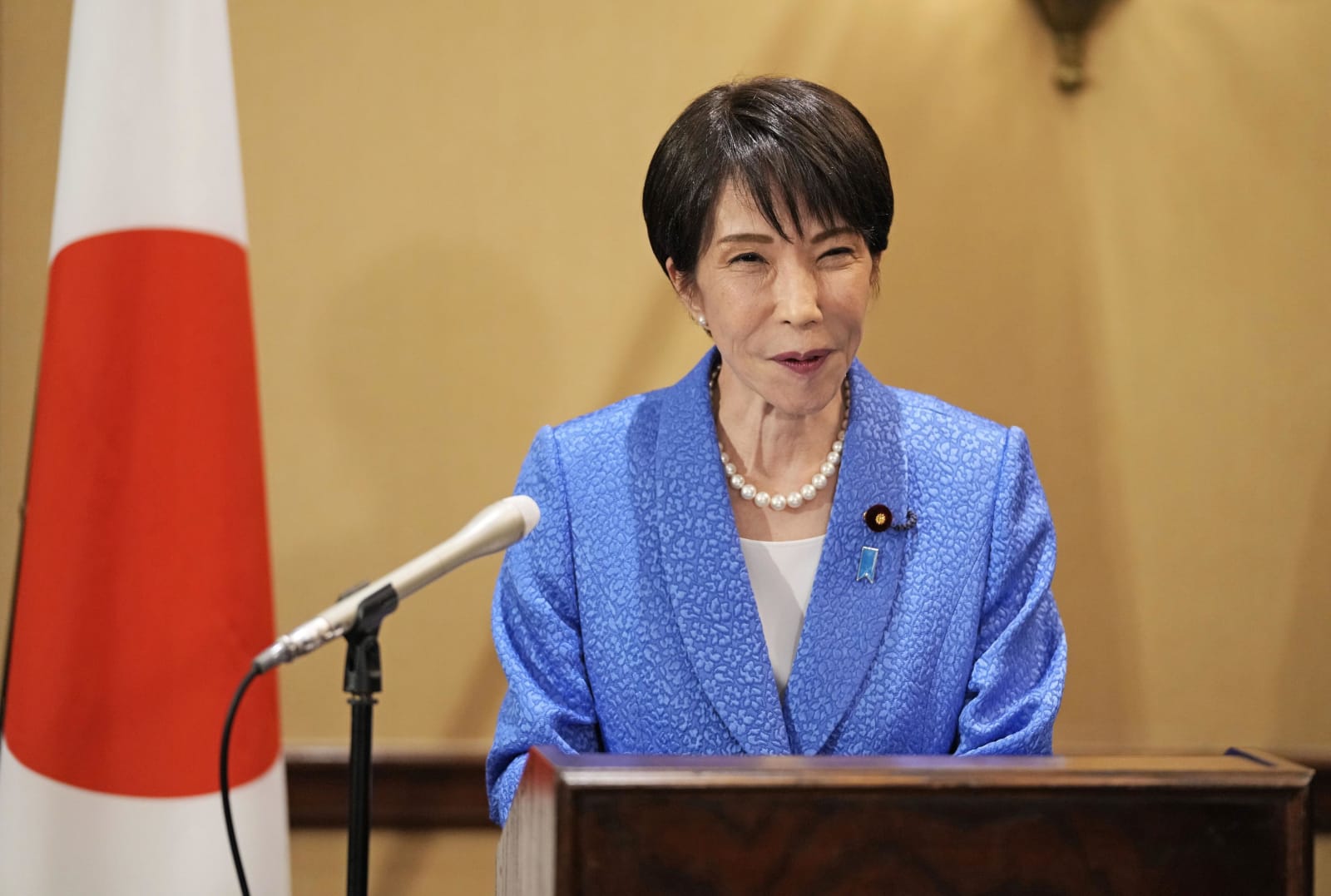
Japan’s Strategic Focus on the Indo-Pacific Amid U.S.-China Dynamics
Japanese Prime Minister Sanae Takaichi has been working closely with U.S. President Donald Trump to ensure that Washington remains focused on the Indo-Pacific region, particularly in relation to China. However, the ongoing conflict in the Middle East is complicating this effort, according to diplomacy experts.
Takaichi emphasized the importance of shaping Trump’s approach towards Beijing in Tokyo’s favor before her upcoming visit to China for talks with President Xi Jinping. Originally scheduled for the end of this month, the trip has been postponed due to the Middle East conflict.
During their meeting at the White House, which was partly open to media, Takaichi highlighted the severe security environment not only in the Middle East but also in the Indo-Pacific region, referencing China’s growing military activities. She expressed appreciation for Trump’s confidence in Japan and his commitment to the alliance despite the current situation.
Trump had announced the date of his summit with Takaichi in February, months after he had indicated he would visit China in the spring for talks with Xi. Masafumi Ishii, a director at the Resona Research Institute, noted that the timing of the summit with Japan, ahead of the one with China, was optimal.
For Japan, it is crucial to “input” what it hopes the United States will do before Trump heads to Beijing, Ishii said. He pointed out that aligning U.S.-Japan policies on China before the U.S.-China summit is essential.
Kazuhiro Maeshima, a professor at Sophia University, agreed on the need for Japan and the United States to get alignment on their China policies ahead of the U.S.-China summit. He warned that instability in the Middle East could thin the U.S. military presence in the Indo-Pacific, urging caution against an “overly conciliatory stance” toward China.
Maeshima highlighted the importance of preventing Trump from making statements at the summit with Xi that might suggest the U.S. would not intervene in a contingency involving Taiwan. This is especially critical given that Taiwan is a democratic self-ruled island that China regards as an inalienable part of its territory.
In a press release issued after Thursday’s talks, the White House stated that Trump and Takaichi “committed to peace and stability across the Taiwan Strait as an indispensable element of regional security and global prosperity” and “opposed any attempts to unilaterally change the status quo, including by force or coercion,” without naming China.
Maeshima noted that a strong U.S.-Japan alliance is “the most effective card” Washington holds in negotiations with China, something Trump is likely to “understand well.”
Takaichi has cultivated a strong personal rapport with Trump, demonstrated during their joint visit to a U.S. nuclear-powered aircraft carrier at Yokosuka, near Tokyo, during his Japan trip shortly after she took office in late October. The display of their close ties was intended as a signal to China that Japan is “firmly aligned” with the United States.
In this context, Trump’s decision not to defend Takaichi after her remarks in November on how Japan could potentially get involved in a Taiwan crisis may reflect his desire to avoid complicating U.S.-China relations. “He likely wanted her not to say anything unnecessary,” Maeshima noted.
Takaichi’s remarks at parliament that an attack on Taiwan could constitute a “survival-threatening situation” for Japan, potentially prompting the Self-Defense Forces to act in support of the United States, infuriated Beijing and sent Japan-China ties to their lowest point in years.
A U.S. intelligence report described Takaichi’s remarks as a “significant shift” for a sitting leader of Japan, though Tokyo’s top government spokesman pushed back against the assessment, stating the government’s position has been consistent.
At Thursday’s summit, Trump touched on Japan-China ties, saying during the part open to media, “I know they have a little bit of an edgy relationship, and I just like to know where it stands.”
Ishii emphasized the importance of Takaichi conveying to Trump that she has no intention of withdrawing her Taiwan remarks and that Washington should address Beijing with that understanding in mind.
Meanwhile, the conflict in the Middle East, triggered by the Feb. 28 U.S.-Israeli airstrikes on Iran, has put Japan in a difficult position. Japan, a close U.S. ally, relies on the Middle East for over 90 percent of its oil imports and maintains broad diplomatic ties in the region, including traditionally friendly relations with Iran.
Trump recently called on countries including Japan to dispatch vessels to help secure the safety of navigation in the vital oil shipping route of the Strait of Hormuz. While he later backed down from the request after their reluctance to step in, Trump reiterated at Thursday’s talks his plea for more support from Tokyo and others.
Takaichi said she told Trump that Japan is ready to contribute to the safety of the strait, but also explained “in detail what Japan can do and cannot do” from a legal perspective under the country’s war-renouncing Constitution.
For Japan, whose pacifist Constitution makes overseas deployments of the SDF politically sensitive, options remain limited, many analysts say.
Given the unstable Middle East situation, Ishii added that leveraging Tokyo’s connection with both Washington and Tehran to pursue mediation efforts could align with Takaichi’s vision of what she calls Japanese diplomacy “flourishing on the world’s center stage.” “Even if mediation ultimately fails, the effort itself would signal to the United States that Japan is a reliable partner,” Ishii said. “The hurdles may be high, but from the perspective of energy security as well, it would serve Japan’s national interests.”

Bahran Hariz adalah seorang penulis di Media Online IKABARI.