Strategic Road Map Needed for Philippine Mining Sector
As the Philippines explores partnerships with several countries to harness its potentially vast wealth of critical minerals, analysts have emphasized the need for a coherent strategy to develop the country’s mining industry to globally competitive standards. President Ferdinand Marcos Jnr’s administration has signed multiple agreements over the past months, including a memorandum of understanding with the United States to cooperate on diversifying global critical mineral supply chains.
The accord, signed during an inaugural ministerial meeting on critical minerals hosted by US Secretary of State Marco Rubio in Washington last month, is expected to shift Manila’s mining sector from raw mineral ore exports to domestic processing. Philippine Environmental Secretary Raphael Lotilla highlighted the partnership as one that would help build “a Filipino-led industry that processes our own resources, creates high-skilled jobs, and strengthens our position in the global hi-tech supply chain.”
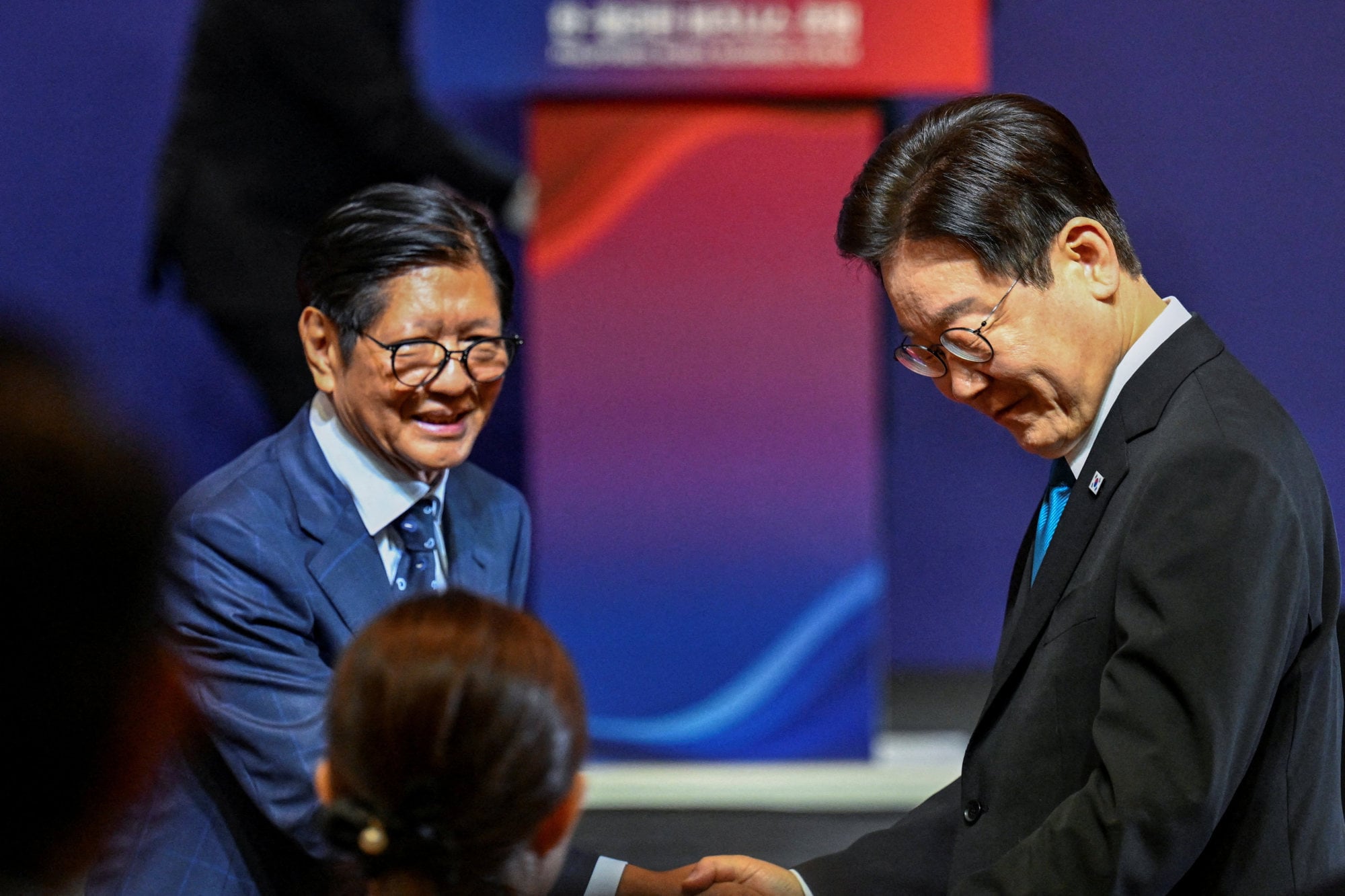
The Philippines also agreed to expand cooperation on critical minerals with South Korea during President Lee Jae Myung’s visit to Manila earlier this month, when both sides also signed agreements on artificial intelligence, defense industry, and nuclear energy.
Talks on a critical minerals deal between the Philippines and Canada are also in progress. Earlier this month, a delegation from the Philippines took part in the Prospectors and Developers Association of Canada Convention in Toronto, a key gathering for the global mining industry.
Analysts Call for Coherent Strategy
A lack of a proper road map to realize the country’s mining potential is hindering its ambitions to grow the industry, according to analysts. Alvin Camba, a non-resident fellow at the Atlantic Council’s Indo-Pacific Security Initiative and a lead scientist and director of research at AI firm Lyvi, said: “There is no coherent, fully articulated national strategy. Both the Duterte and Marcos administrations have made progress in securing overseas partners, but without structural reforms, these partnerships are unlikely to translate into sustained investment.”
Observers also point out that the Philippines has yet to define which minerals are critical and develop a framework to protect these resources and ensure a sustainable supply chain. Camba noted that this lack of a coherent framework “stands in stark contrast to Malaysia’s National Advanced Materials Technology Roadmap and Indonesia’s integrated nickel industrial policy.”

Amid rising demand for nickel in producing electric vehicle batteries, Indonesia’s output of the mineral is now seven times that of the Philippines, according to Camba. Mark Manantan, a research fellow for the Centre for Global Security at La Trobe University, said Manila’s road map should be comprehensive, encompassing related critical technologies.
“Like other trends in the current geoeconomic landscape – from AI to data centres to critical minerals – the country must come up with a critical technology road map to truly compete globally … If we look at the technological landscape as an ecosystem, critical minerals are needed to produce semiconductors, which then provide compute power embedded in data centres to produce AI algorithms,” he said.
“China is the best example of this. I would like to see a critical technologies road map, because I view technology as an ecosystem – everything is interconnected,” he added.
Structural Constraints and Opportunities
Officials and industry players note that current exploratory operations are only covering a tiny portion of the country’s land area with potential mineral reserves. Juan Miguel Cuna, acting chief of the Department of Environment and Natural Resources, told a news programme on March 10: “Out of 30 million hectares of land [in] the entire Philippines, there are about 9 million hectares that have been identified as having deposits of various commodities.”
Camba said the Philippines could tap huge global opportunities to grow its industry, as it possessed the world’s fifth-largest mineral reserves, with an estimated US$1 trillion in untapped supplies of copper, gold, nickel, zinc, and silver. “Yet only about 5 per cent of these reserves have been explored, and mining contracts cover just 3 per cent of mineralised areas. At the same time, global demand for these resources, driven by climate change mitigation, clean energy, and the broader energy transition, is expected to remain strong for the foreseeable future.”
According to Camba, the Philippines is a “second-tier mineral economy” with the lowest value in the mining supply chain, with a dearth of investment and infrastructure to fulfill its potential.
Manantan agreed, saying that the Philippines lacked an enabling regulatory environment, infrastructure, and skilled workforce to tap its natural wealth and develop a thriving critical minerals sector.
As part of the road map, Camba said that the Philippines should take steps to curb the power of local dynastic families in the mining industry. Noting that about 60 per cent of mineral deposits and nearly half of mining projects are located on indigenous lands, he said local elites had taken advantage by launching mining projects to the detriment of local communities.
The Philippines should also take steps to diversify its mining sector and lessen its dependence on China, according to Camba, citing nickel as an example. “On the supply chain side, the Philippines remains deeply embedded in China-centred mineral networks. China dominates as a market for Philippine nickel, and shifting this dependence will take time.”

Bahran Hariz adalah seorang penulis di Media Online IKABARI.