Chinese tea brands are making significant strides in expanding their presence in South Korea, challenging the traditional dominance of coffee. As more consumers seek healthier beverage options, Chinese tea chains like Chagee and Auntea Jenny are entering the market with unique offerings that cater to local tastes.
Chagee, a brand known for its milk tea and cultural inspiration rooted in traditional Chinese heritage, is planning to open three outlets in Seoul during the second quarter of the year. This marks the company’s first expansion into East Asia outside of China. The first store will be located in Gangnam, a major business hub in Seoul.
“Even before the official opening, many South Korean consumers have shown strong interest in the brand,” the beverage chain stated. This enthusiasm is evident as more people are looking for alternatives to high-caffeine coffee drinks.

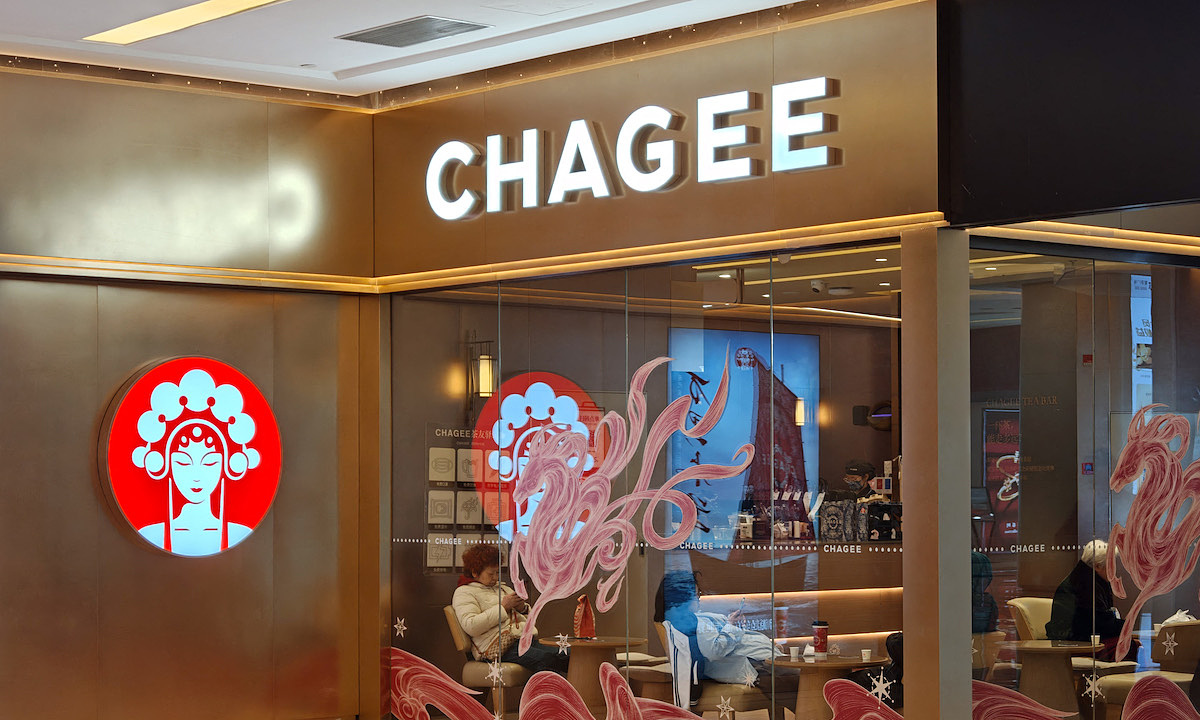
A CHAGEE shop in Yangpu District, Shanghai, China on March 19, 2026. Photo by CFOTO via AFP
As of the end of September, Chagee operated 7,338 teahouses and has established a solid presence across Southeast Asia, including Indonesia, Malaysia, the Philippines, Vietnam, Singapore, and Thailand. The brand’s success in these regions has paved the way for its expansion into South Korea.
Another Chinese bubble tea chain, Auntea Jenny, recently registered its franchise business in South Korea, marking a key step before launching franchised outlets. The company opened its first store in Seoul in October, further signaling the growing interest in Chinese tea beverages.
The increasing demand for modern Chinese tea drinks among South Koreans is driving the expansion of Chagee, Auntea Jenny, and other competitors. Choi Yong-hee, a 34-year-old graduate student based in Sinchon, where Chagee is set to open one of its stores, is among those who have embraced the brand. He first encountered it during a family trip to Shanghai last October.
“What I liked about Chagee was that the milk tea wasn’t too strong and was fragrant, making it easy to enjoy. I haven’t been able to find milk tea like this in Korea,” Choi said. “I’m glad I can have it more often now.”
More South Koreans are traveling to China, aided by Beijing’s visa-free policies, where they are becoming familiar with freshly prepared tea-based drinks infused with fruit, juices, vegetables, and dairy products. Social media is also playing a role in driving interest, with users sharing reviews and menu recommendations. Google Trends data shows searches for “Chagee tea” in South Korea have surged 110% over the past three months.
A Brewing Market
For years, Taiwan’s Gong Cha dominated South Korea’s milk tea segment. Founded in Kaohsiung in 2006, the brand entered Seoul in 2012 and now operates around 800 outlets nationwide. However, analysts say tea-based beverages are increasingly gaining traction as a healthier alternative to coffee, presenting an opportunity for Chinese entrants.
Sales of decaffeinated beverages are surging, with Starbucks Korea reporting that decaf drink sales reached 9.8 million cups in the first quarter of 2025, marking a 31% increase from the same period a year earlier. This trend explains why more Chinese chains are expanding in South Korea by offering drinks with lower caffeine and higher content of milk and fruits.
ChaPanda entered South Korea in 2024 and now runs about 20 outlets, while rivals HeyTea and Mixue have established six and 14 stores, respectively. “The Korean milk tea industry is still in its early stages of growth and despite Taiwanese-style milk tea brands starting the endeavor, the market size is still limited,” said a spokesperson for ChaPanda, which opened the first South Korean store in 2024.
Local customers have “basically zero awareness” of fruit teas, the spokesperson said. “Some customers saw the fruits displayed next to our counters and asked if ChaPanda was a fruit shop.” ChaPanda said it had a lot of customers returning to the brand after their first visit and added that over 70% of its customers are Korean customers.
An employee passes out hot and cold coffee drinks to a customer at a cafe in Seoul, January 2023. Photo by AFP
Many Chinese milk tea shops often have Chinese students and tourists alike as its main customers, it said. Another reason for the surging overseas investment of Chinese tea brands is the saturation in the domestic market.
Shanghai-based consultancy Triunity reported in May that annual growth of the new-style tea market in China slowed from 44% in 2023 to 19.7% in 2024, and is projected to ease further to 12.4% in 2025. Chinese brands have already gained traction in Southeast Asia, their first overseas market due to geographic proximity and stronger acceptance of Chinese labels.
Between 2019 and 2024, Mixue and Chagee expanded their store networks in the region by 80%, according to a July report by Euromonitor International. As of mid-2025, Mixue operated more than 4,700 outlets across 12 countries and regions, including Vietnam, Cambodia, Japan, South Korea, and Australia.
Molly Tea, which made its international debut in 2024, has opened more than 20 locations spanning North America, Europe, and Southeast Asia. According to Moqian Sun, founder of marketing and consulting strategy firm The Harvest, the expansion strategy—rapid rollout in prime retail locations, competitive pricing, localized flavors, and the use of celebrities to boost social media visibility—has proven effective and is now being replicated elsewhere.
“Consumers across Asia Pacific are already highly receptive to tea-based drinks, which makes it easier to replicate proven business models,” Sun said. She added that sustained success would depend on how effectively brands adapt to local tastes, as well as their ability to manage supply chains and maintain consistent store quality.

Bahran Hariz adalah seorang penulis di Media Online IKABARI.